(2).png)

Setting out to make every child ready for school
There are days when global crises feel distant, wars unfolding in places we may never see. And then there are days when those same crises quietly enter our homes. In the rising cost of an LPG cylinder. In a mother rethinking how often she can cook a full meal. In the small, invisible adjustments families make every day.
We are living in a deeply interconnected world. A war somewhere doesn’t stay there. It travels through fuel prices, inflation, and fragile systems; until it reaches kitchens, conversations, and choices inside our homes.
And yet, in the middle of all this, something else is unfolding. Quietly. Persistently.
Resilience.
But resilience doesn’t live in adults alone. Children are not passive observers of crisis, they are active meaning-makers. Recently, a video from Gaza went viral. Children, surrounded by conflict, were seen imitating funeral rituals as part of their play. It’s uncomfortable to watch. But it reveals something deeply human. Children process the world the only way they know - through play. Even in the harshest conditions, they create meaning, rehearse emotions, and try to make sense of what they see around them.
Play, in this context, is not trivial. It is survival.
It’s easy to think of resilience as something people either have or don’t. But the truth is, resilience is built day by day, interaction by interaction.
These are not isolated moments. They are the building blocks of how families endure and how children continue to grow despite uncertainty.
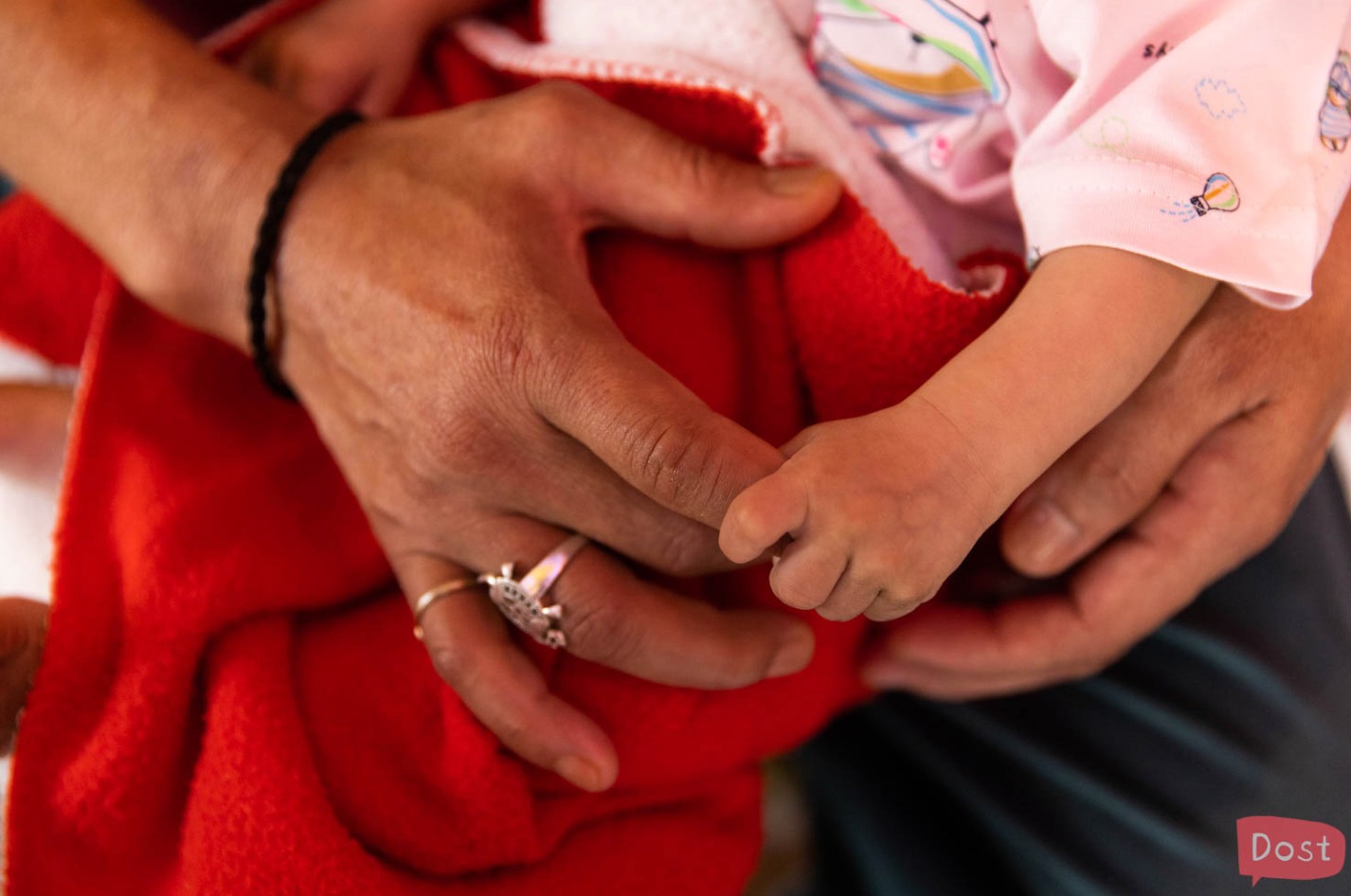
I’m reminded of a father from Nawada, Bihar, who shared something simple yet profound. "Earlier after coming from work I did not know how to engage with my child, I used to see my wife and mother interacting even while cooking or feeding the child. When I was introduced to Parvarish calls I was able to interact with my child but my wife and mother still felt that they needed support and I felt that I should not listen to these calls alone… now my mother, my wife everyone sits together when the call comes. This has become our time with the child between all the work and chaos at home"
What changed here isn’t just behavior, it’s the ecosystem of the home. A single moment of listening became a shared family ritual. A space where learning, conversation, and connection coexist no matter what the situation is at home.
In a world that feels increasingly unpredictable, this is what resilience looks like. Not grand gestures but small, consistent acts of togetherness.
When a parent talks to a child, tells a story, or simply includes them in daily chores, something powerful is happening. They are creating stability in instability. They are building language, confidence, and emotional safety. And children, in turn, respond, they stretch their imagination, they find joy in fragments. They build their own versions of resilience, sometimes in ways we don’t immediately understand.
We cannot control global conflicts or economic shocks. But we can strengthen what sits closest to the child - ‘their home environment’. When systems falter, families become the first line of response. And when families are supported, not just with resources, but with knowledge, confidence, and connection, they don’t just cope. They adapt. They respond. They rebuild.
In a world where crises travel faster than ever, resilience cannot remain an abstract idea. It has to be rooted somewhere real, somewhere consistent. It has to begin in the quiet moments which could be a shared call, a story, a conversation, a game.
Because even when the world feels uncertain, children will keep playing, parents will keep trying and in those small acts, resilience quietly will takes shape.